

Choosing the right kitchen sink is like picking the perfect piece of art for your home—it should reflect your style and meet your needs.
When choosing the right kitchen sink size, consider factors such as the size of your kitchen, your cooking and cleaning habits, and the dimensions of your cabinets. These considerations will ensure your sink fits well and meets your needs.
While these initial factors provide a strong foundation, delving deeper into other elements like standard sink sizes and installation nuances can further refine your choice. Explore our detailed guide to gain a comprehensive understanding of selecting the perfect kitchen sink.
Double-bowl sinks are ideal for families of four or more.True
Double-bowl sinks allow multitasking, suiting larger families’ needs.

How Does Family Size Affect Your Kitchen Sink Choice?
Your family’s size plays a crucial role in determining the ideal kitchen sink, balancing functionality and space.
Family size influences kitchen sink choice by dictating the sink’s capacity and features needed for daily use. Larger families may require deeper or double sinks to accommodate increased dishwashing, while smaller families might prioritize space-saving options.

Understanding the Role of Family Size
The size of your family directly impacts the daily volume of dishes and utensils that need washing. A larger family typically generates more dirty dishes, necessitating a sink with ample capacity. Conversely, smaller households may benefit from more compact designs that free up counter space.
Single vs. Double Sinks
For a family of four or more, a double-bowl sink1 can be a game-changer. It allows you to multitask, such as washing dishes in one basin while soaking pots in another. On the other hand, a single-bowl sink might suffice for smaller families or those who rely heavily on dishwashers.
| Family Size | Recommended Sink Type |
|---|---|
| 1-2 Members | Single Bowl |
| 3-4 Members | Single or Double Bowl |
| 5+ Members | Double Bowl |
Depth and Capacity Considerations
Depth is another crucial factor influenced by family size. A deeper sink can handle more dishes at once, which is ideal for larger families who cook frequently. Consider a deep undermount sink2 to maximize space and reduce splashes.
Maintenance and Cleaning Needs
Larger families may find that they need to clean their sink more often due to increased usage. Choosing a material like stainless steel, known for its durability and ease of maintenance, can be beneficial.
Space Utilization for Larger Families
If your kitchen space is limited but your family size demands a larger sink, consider innovative designs such as corner sinks3 or those with integrated cutting boards and drying racks. These options help maximize functionality without compromising valuable countertop space.
Larger families need deeper kitchen sinks.True
Deeper sinks handle more dishes, ideal for larger families.
Single-bowl sinks are best for families of five or more.False
Double-bowl sinks are recommended for larger families to multitask.

What Are the Standard Measurements for Kitchen Sinks?
Choosing a kitchen sink with the right measurements ensures functionality and a seamless fit in your kitchen.
Standard kitchen sinks typically range from 22 to 30 inches in width, with depths varying from 6 to 12 inches. It’s essential to match these dimensions with your kitchen layout and cabinet size for optimal functionality and aesthetics.
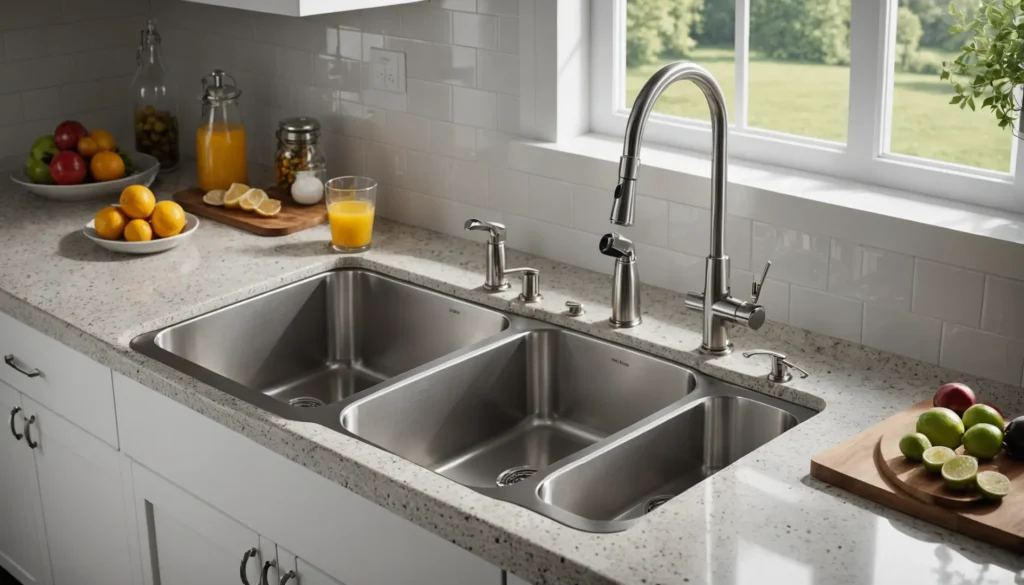
Understanding the Basics
The standard width for a kitchen sink usually falls between 22 and 30 inches, while the depth can range from 6 to 12 inches. This diversity accommodates various kitchen sizes and personal preferences. The height of the sink, often overlooked, impacts usability, particularly in terms of ergonomics.
Width Variations
- 22-24 inches: Ideal for smaller kitchens or secondary sinks. These sizes provide enough space for basic tasks without overwhelming compact spaces.
- 25-27 inches: A mid-range option suitable for medium-sized kitchens, balancing functionality and space.
- 28-30 inches: Best for larger kitchens or those who frequently cook and clean, offering ample room for tasks.
Depth Considerations
Depth is crucial in determining how comfortable a sink is for dishwashing and other tasks:
- 6-8 inches: Suitable for shallow tasks but might not accommodate large pots or pans easily.
- 9-12 inches: Offers more flexibility and is better suited for heavy-duty kitchen work.
Specialty Sinks
In addition to standard options, specialty sinks like farmhouse styles have unique measurements. These sinks often extend beyond the countertop, requiring custom installations.
Understanding these dimensions will guide you in selecting a sink that not only fits your kitchen aesthetically but also enhances its usability. Explore further on factors like installation types4 and material choices5 that influence your sink selection.
| Type | Standard Width | Standard Depth |
|---|---|---|
| Single Bowl | 22-30 inches | 6-10 inches |
| Double Bowl | 33-36 inches | 8-12 inches |
| Farmhouse | Varies | Varies |
Standard sink width is 22-30 inches.True
Standard kitchen sinks typically range from 22 to 30 inches wide.
Farmhouse sinks have fixed measurements.False
Farmhouse sinks have varying measurements and often require custom installations.
How Do Cooking Habits Influence Sink Size Selection?
The way you cook can greatly impact the type of kitchen sink you choose, affecting both its size and design.
Cooking habits dictate sink size by determining the need for space, compartments, and additional features to accommodate meal preparation and cleanup efficiently.

Assessing Your Cooking Style
Different cooking styles necessitate varying sink requirements. For instance, if you often prepare large meals or engage in batch cooking, you might prefer a larger sink with multiple compartments to handle extensive prep work. In contrast, if you favor quick meals or takeout, a smaller, simpler sink may suffice.
Frequency of Use
Consider how often you use your kitchen for cooking. Regular cooks will benefit from a deeper sink that can handle larger pots and pans without splashing water all over the counter. Meanwhile, occasional cooks might prioritize counter space over sink capacity.
Specialized Cooking Needs
Certain culinary techniques demand specialized sinks. Enthusiasts of Asian cuisine, which often involves rinsing rice or soaking noodles, might find value in an integrated colander feature. Similarly, bakers who frequently wash large mixing bowls will appreciate a spacious, deep basin.
Cleaning Routines
Cleaning habits also play a role. If you prefer washing dishes by hand, a double-basin sink may be ideal to separate soapy water from rinsing water. Conversely, if you primarily use a dishwasher, a single basin might free up more counter space for other uses.
Available Features and Accessories
Modern kitchen sinks come with a range of features like built-in cutting boards, drying racks, and soap dispensers. Assessing these options based on your cooking habits can optimize your kitchen workflow. For example, frequent choppers might benefit from a built-in cutting board6 for seamless food prep and cleanup.
By understanding your unique cooking habits, you can make informed decisions on the perfect sink size that aligns with your lifestyle.
Larger sinks suit batch cooking enthusiasts.True
Batch cooking requires more space for prep and cleaning, favoring larger sinks.
Frequent takeout eaters need double-basin sinks.False
Takeout eaters often require less sink space, making single basins sufficient.
Why Is Cabinet Size Important When Selecting a Kitchen Sink?
A well-sized cabinet is crucial for ensuring your kitchen sink fits seamlessly into your space.
Cabinet size is pivotal in selecting a kitchen sink as it dictates the maximum dimensions of the sink you can accommodate. Ensuring your cabinets are compatible with your desired sink size prevents installation issues and enhances kitchen functionality.

Understanding the Relationship Between Sink and Cabinet Sizes
When planning your kitchen layout, recognizing the relationship between your cabinet dimensions7 and sink size is essential. The cabinet size acts as a boundary, determining the maximum width, depth, and sometimes height of the sink you can install.
For example, a typical base cabinet is 24 inches deep, which can comfortably house a sink that is up to 22 inches deep. Ensuring that your sink does not exceed these parameters prevents installation complications and maintains structural integrity.
How to Measure for Your Ideal Sink
Begin by measuring the width of the cabinet from left to right. This measurement will help you understand the maximum width your sink can have. Then, measure the depth from the front edge to the back wall of the cabinet.
Remember to account for any internal obstructions like plumbing or reinforcements that could affect your available space. These measurements ensure that your chosen sink fits snugly without compromising functionality or design.
| Measurement | Description |
|---|---|
| Width | Side-to-side measurement of space |
| Depth | Front-to-back measurement |
Potential Challenges and Solutions
- Limited Cabinet Space: If your cabinets are smaller than standard sizes, consider selecting a compact or corner sink model to maximize space efficiency.
- Obstructions: Be mindful of piping or garbage disposal units that might interfere with sink installation. Opt for sinks with adjustable fittings to adapt to these challenges.
Understanding these dynamics allows you to choose a sink that not only fits perfectly but also enhances your kitchen’s usability and aesthetic appeal. If you’re looking for specific advice on how cabinet styles affect sink selection8, further research is encouraged.
Cabinet depth determines sink depth limit.True
A cabinet’s depth sets the maximum sink depth to avoid installation issues.
Sink width can exceed cabinet width.False
A sink wider than the cabinet won’t fit, causing installation problems.
Conclusion
Ultimately, selecting a kitchen sink that suits both your space and lifestyle is key. Reflect on how your choice will impact daily activities and make a decision that feels right for you.
- Discover multitasking advantages with double-bowl sinks for larger families.: Because there are two bowls, you can stack dirty dishes in one, while still being able to use the other for washing vegetables, rinsing utensils … ↩
- Learn why deep sinks are ideal for handling large dish loads.: Because the sink is mounted underneath the counter, the lip of it is flush against the countertop. This creates smooth lines with a continuous flow that is … ↩
- Explore efficient sink designs that optimize limited kitchen space.: Discover top tips to maximize space in your small kitchen with these smart storage ideas. Make the most of every inch and keep your kitchen organized and … ↩
- Explore various installation types to optimize your kitchen sink setup.: There are four common types of mounting installations for a kitchen sink into the countertop: drop-in, undermount, dual mount, and farmhouse. Drop-in ↩
- Discover materials that enhance durability and aesthetics.: 13 Best Materials for Kitchen Sinks · Stainless Steel · Copper · Enameled Cast Iron · Fireclay · Enameled Steel · Solid Surface Acrylic Resin. ↩
- Discover integrated features enhancing kitchen efficiency and organization.: Lordear Undermount Kitchen Sink 23 x 19 Inch Sink Kitchen 16 Gauge Stainless Steel Kitchen Sinks Single Bowl Workstation Sink with Cutting Board Handmade. ↩
- Learn how cabinet dimensions dictate your sink choices.: We are going to dive into the details of how cabinets and sinks are measured, what factors to consider, and how to determine if a particular sink will fit in … ↩
- Discover how different cabinet styles influence sink compatibility.: Learn the different types of kitchen sinks and standard kitchen sink sizes. Use these tips to find the right size, shape, and material for your kitchen. ↩


